How is Property Divided in a Florida Divorce?
Florida is an equitable distribution state, which means assets are divided fairly rather than equally. Here's how courts determine what's fair, what counts as marital property, and what you can expect.
By IncoVoid Editorial Team
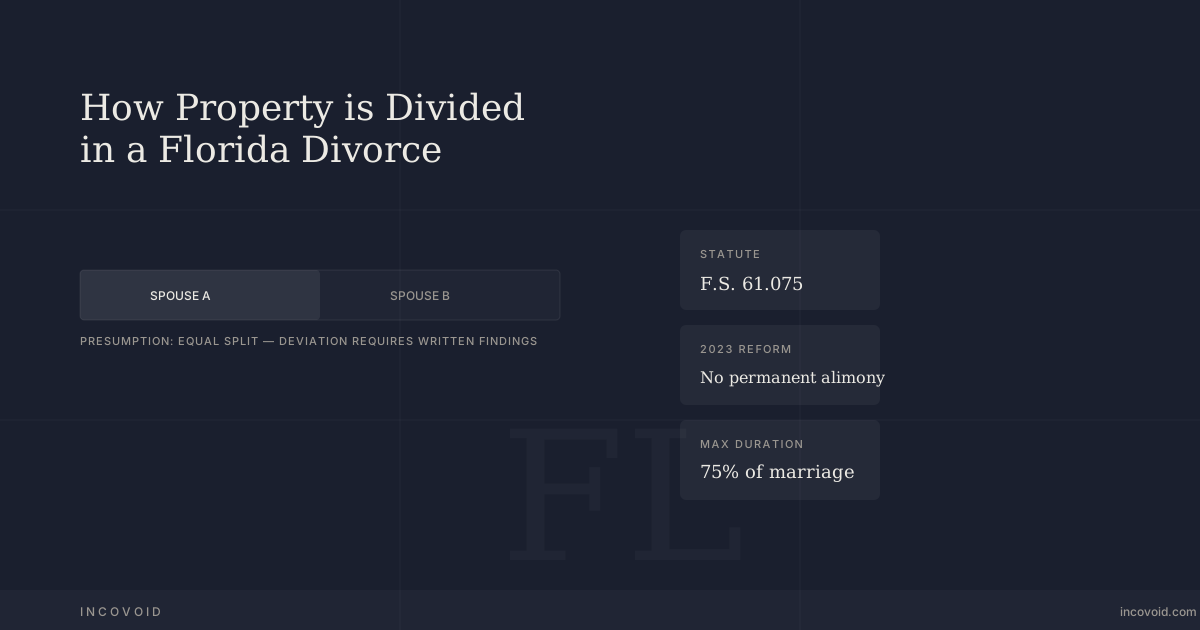
Florida follows equitable distribution principles for dividing marital property in a divorce. Unlike community property states, where assets are generally split 50/50, Florida courts divide property in whatever way they determine is fair, considering the full circumstances of the marriage.
In practice, Florida courts start with an equal split and adjust from there. Understanding when and why they adjust is the key to anticipating your outcome.
Marital Property vs. Separate Property
The first question in any Florida property division is whether an asset is marital or separate.
Marital property is generally everything acquired by either spouse during the marriage, regardless of whose name it is in. This includes:
- Salaries, wages, and other income earned during the marriage
- Real estate purchased during the marriage
- Retirement account contributions made during the marriage
- Investment and savings accounts funded with marital income
- Business interests developed or grown during the marriage
- Appreciation in value of marital assets during the marriage
Separate property belongs to one spouse alone and is not subject to division. Florida recognizes these categories:
- Assets owned before the marriage
- Inheritances received by one spouse (even during the marriage)
- Gifts received by one spouse from a third party
- Income from separate property (in most cases)
- Assets excluded by a valid prenuptial or postnuptial agreement
The key risk with separate property is commingling. If you deposit an inheritance into a joint account that is used for household expenses, it can lose its separate character and become marital property. Keeping separate assets clearly separate, with their own accounts and paper trail, is the only reliable protection.
The Equitable Distribution Standard
Florida Statute §61.075 establishes the equitable distribution framework. Courts start with the presumption that marital assets should be split equally. A court can depart from equal division if the departure is justified by specific factors:
- Economic circumstances of each spouse, including the desirability of allowing the custodial parent to remain in the family home
- Contribution of each spouse to the marriage, including contributions as homemaker and caregiver
- Duration of the marriage — longer marriages tend toward more equal splits
- Career interruption — if one spouse left a career or reduced hours to support the family, this is factored into their favor
- Intentional dissipation of marital assets — if one spouse wasted marital funds through gambling, reckless spending, or deliberate destruction of assets, their share can be reduced
- Liabilities — debts are divided equitably alongside assets
- Any other factor the court finds relevant to a just result
Unlike Texas, Florida does not allow fault in the breakdown of the marriage (such as adultery) to directly influence property division in most cases. Florida is a no-fault divorce state, and adultery that did not have an economic impact on the marriage is generally not a factor in property distribution.
The Family Home
The family home often requires separate consideration when children are involved. Florida courts frequently allow the custodial parent to remain in the home until the youngest child turns 18, even if both spouses have equity in it.
This does not mean the non-custodial spouse loses their equity. It means access to that equity is deferred. The non-custodial spouse's share is typically paid out when the home is eventually sold or refinanced.
If there are no children, the home is usually either sold with proceeds split equitably, or one spouse buys out the other's share.
Retirement Accounts
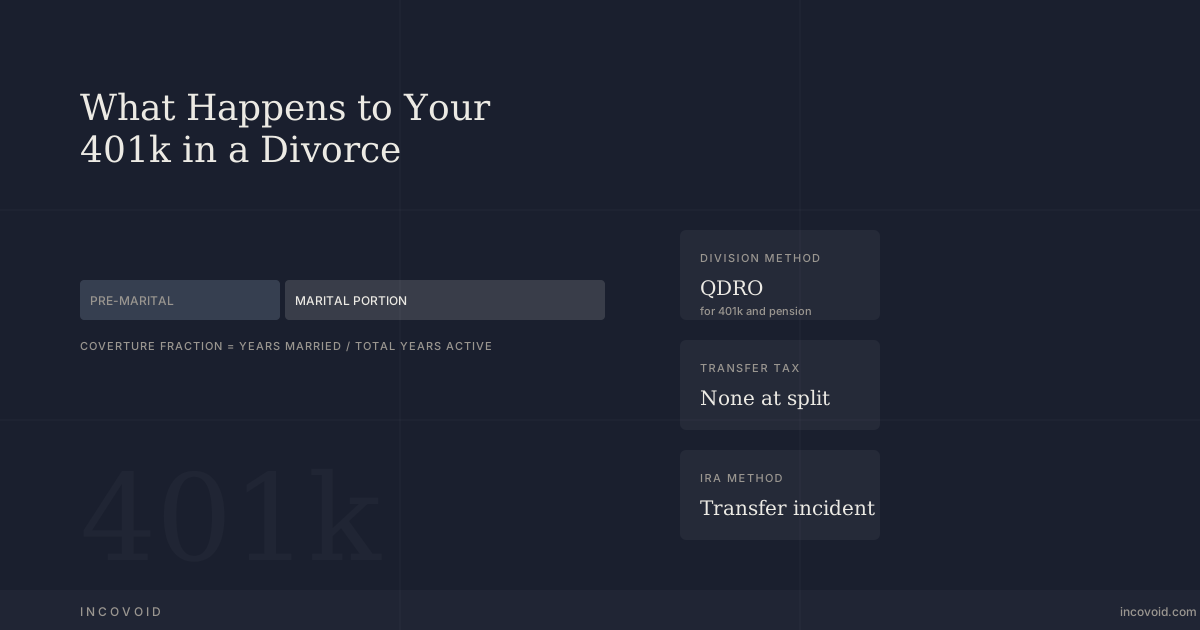
Retirement contributions made during the marriage are marital property in Florida, regardless of which spouse made them. Dividing a 401(k) or pension requires a Qualified Domestic Relations Order (QDRO), a court order separate from the divorce decree that instructs the plan administrator to carry out the division.
Failure to execute a QDRO before or shortly after the divorce is one of the most common and costly mistakes in divorce proceedings. Without it, the retirement account cannot be legally divided even if your settlement agreement says it should be.
Business Interests
If either spouse owns a business or professional practice, the marital portion is subject to equitable distribution. Valuing that interest requires a formal business appraisal, and the process can be contested.
Florida courts look at the value of the business, how much of that value was created during the marriage, and how much is attributable to the owner-spouse's ongoing personal efforts versus the inherent value of the enterprise. These are fact-intensive determinations that frequently require expert testimony.
Debt Division
Florida divides marital debt equitably alongside marital assets. Debts taken on during the marriage for the benefit of the marriage are generally considered marital liabilities, including:
- Joint credit card balances
- Mortgages on marital property
- Personal loans taken during the marriage
- Home equity lines of credit
A critical point: if your name is on a debt, your creditor is not bound by your divorce agreement. Even if the court orders your spouse to pay a joint credit card, the card issuer can still come after you if your spouse defaults. The only true protection is to refinance or close joint accounts as part of the settlement.
Prenuptial and Postnuptial Agreements
A valid prenuptial or postnuptial agreement can override Florida's default equitable distribution rules entirely. If the agreement clearly defines what is separate and what happens to assets in a divorce, Florida courts will generally honor it as long as it was entered into voluntarily, with full financial disclosure, and without duress.
If you have a prenuptial agreement, your attorney should review it early in the process. If one of you is contesting its validity, that becomes a significant separate legal question.
Want to See Your Florida Property Estimate?
Florida property division depends on your specific assets, the length of your marriage, whether either spouse interrupted their career, and whether there are children in the picture.
IncoVoid calculates your estimated property share using Florida's equitable distribution framework, accounting for the factors courts actually weigh and giving you a realistic range for your situation.
Start your free IncoVoid assessment →
The assessment takes 12–18 minutes. Your report includes an asset breakdown, your estimated share range, and a clear explanation of the methodology.
Want to see your personalized settlement estimates?
IncoVoid calculates your spousal support, property division, and career impact using your state's specific formulas. Takes 12–18 minutes.
Start free assessment →$299 · 14 pages · Your state's laws