How is Alimony Calculated in Florida After a Long Marriage?
Florida overhauled its alimony law in 2023, eliminating permanent alimony. Here's what changed, how duration is now calculated for long marriages, and what factors Florida courts consider.
By IncoVoid Editorial Team
Florida made a significant change to its alimony law in 2023 that affected thousands of divorcing couples, and it continues to shape outcomes today. If you were married for a long time and are now facing divorce in Florida, understanding what changed and what still applies is essential.
What Changed in 2023
Governor DeSantis signed HB 1409 into law in July 2023, fundamentally restructuring Florida alimony. The most significant change:
Permanent alimony was eliminated.
Before 2023, Florida courts could award permanent alimony (ongoing support with no set end date), particularly in long marriages. This option no longer exists for divorces filed after July 1, 2023.
What replaced it is a more structured system with defined duration limits based on marriage length.
How Florida Now Categorizes Marriages
Florida Statute §61.08 now defines three marriage categories for alimony purposes:
| Category | Marriage Length | |----------|----------------| | Short-term | Less than 7 years | | Moderate-term | 7 to 17 years | | Long-term | 17 years or more |
Your marriage category is one of the most important factors in determining how long alimony can last.
Duration Limits After the 2023 Reform
For durational alimony, the most common type awarded today, the maximum duration is:
- Short-term marriages: Up to 50% of the length of the marriage
- Moderate-term marriages: Up to 50% of the length of the marriage
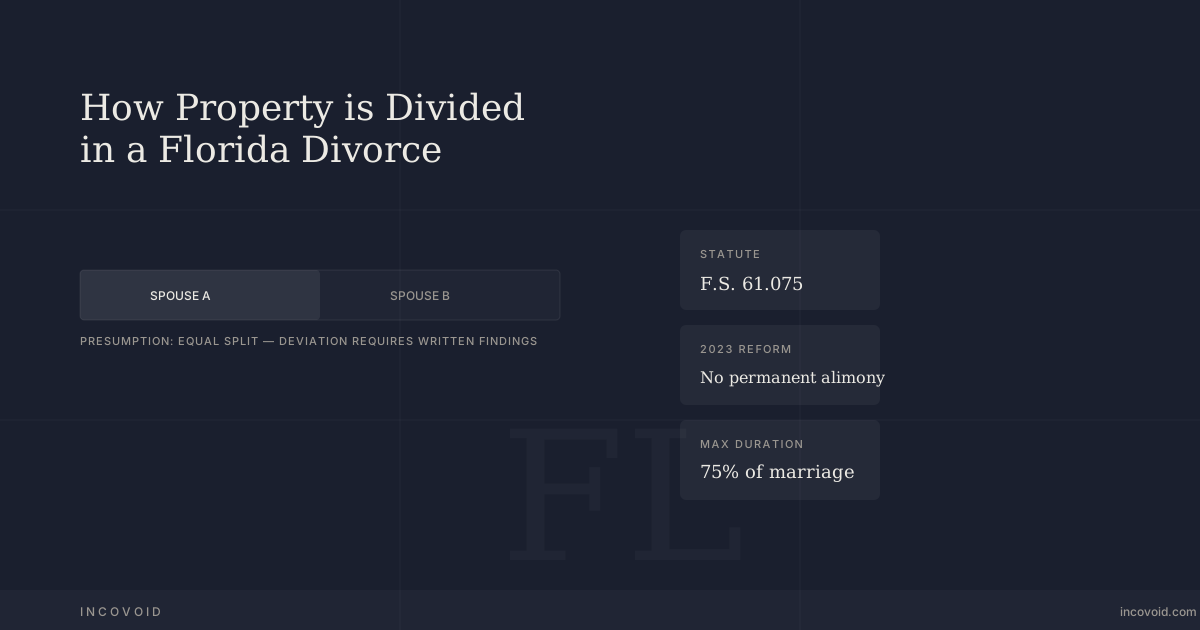
- Long-term marriages (17+ years): Up to 75% of the length of the marriage
For a 20-year marriage, the maximum durational alimony period is 15 years (75% of 20). Courts are not required to award the maximum. This is a ceiling, not a guarantee.
Courts can exceed the 50% or 75% cap only in "exceptional circumstances," a high bar that requires written findings explaining why the standard limit is insufficient.
Types of Alimony Still Available
Even after the 2023 reform, Florida recognizes several alimony types:
Bridge-the-gap alimony helps the recipient transition from married to single life. It's capped at 2 years and cannot be modified once ordered.
Rehabilitative alimony supports a spouse while they acquire education or training to become self-sufficient. It requires a specific written plan for rehabilitation.
Durational alimony provides support for a set period when permanent support isn't appropriate but some ongoing support is. This is now the primary long-term tool.
Lump sum alimony is a one-time payment rather than ongoing monthly support. It's less common but remains available.
How the Amount Is Calculated
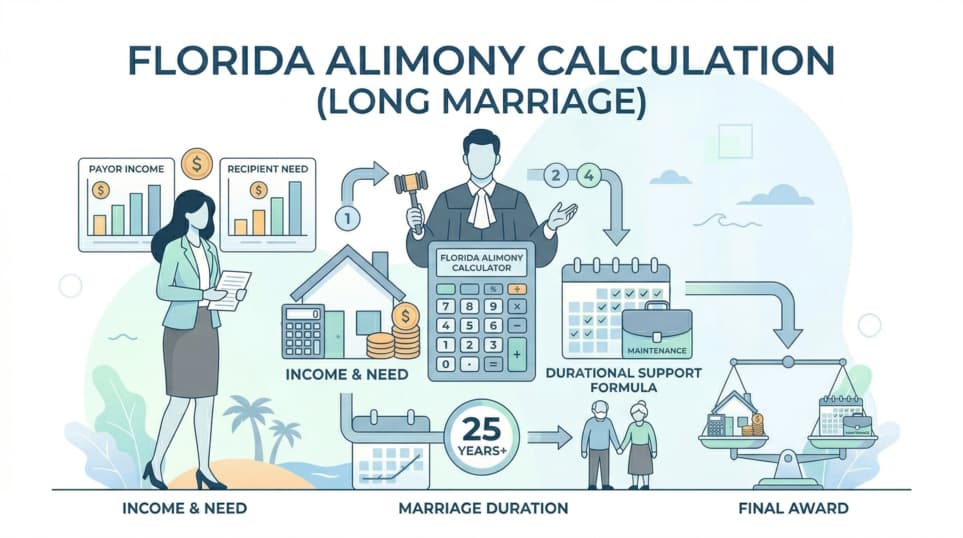
Florida does not have a strict formula for calculating alimony amounts the way New York does. Instead, Florida Statute §61.08 requires courts to consider:
- Standard of living established during the marriage
- Duration of the marriage
- Age and physical and emotional condition of each party
- Financial resources of each party, including assets from property division
- Earning capacities, current and future
- Contribution of each spouse to the marriage, including homemaking and career support
- Responsibilities for minor children: a parent with primary custody may need more support
- Tax treatment of alimony payments
- Sources of income available to each party
- Any other relevant factor
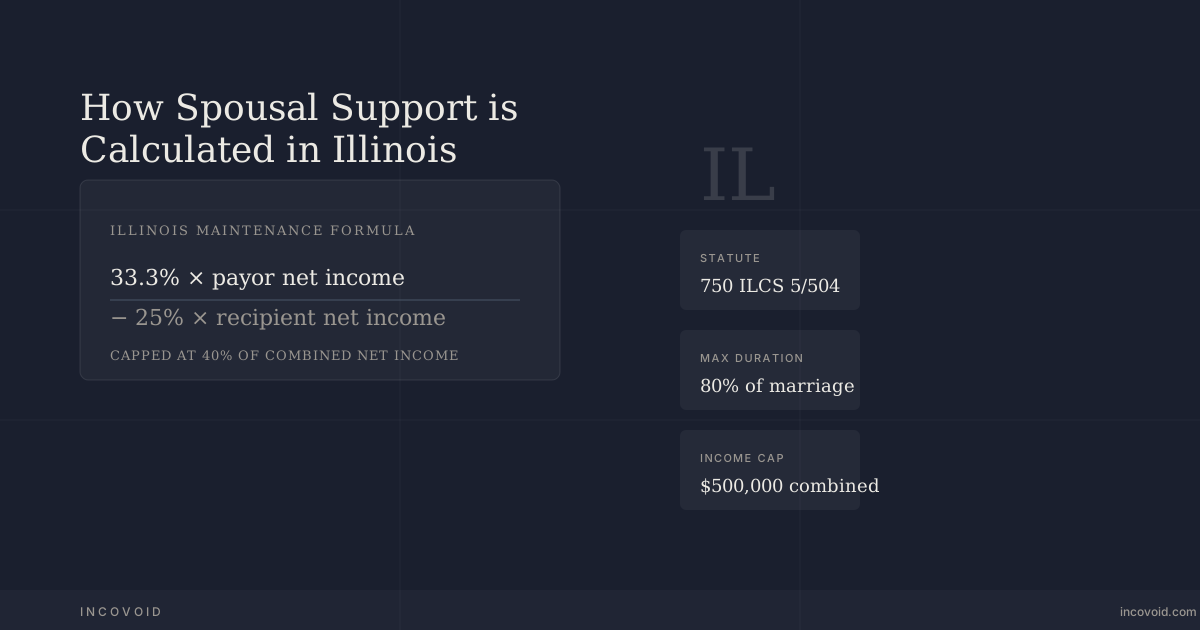
There is no formula to plug numbers into. Two judges looking at the same case can reach different numbers. This is why the range of possible outcomes in Florida divorces is wider than in formula states like New York or Illinois.
What "Long Marriage" Still Means in Florida
Even though permanent alimony is gone, a long marriage still provides meaningful advantages in Florida:
Higher duration cap. The 75% cap for 17+ year marriages is significantly more generous than the 50% cap for shorter marriages.
More compelling need argument. In a 25-year marriage where one spouse was a homemaker or the primary caregiver, courts are more likely to find significant need and award support close to the cap.
Stronger standard of living argument. The longer the marriage, the more established the marital standard of living becomes, and Florida courts explicitly consider this.
Longer consideration period. Courts consider contributions over the entire marriage. A 25-year career sacrifice has more weight than a 5-year one.
The Pre-2023 Reform Situation
If your divorce was filed before July 1, 2023, the old law may still apply to your case. The 2023 reform is not retroactive. It does not automatically modify existing alimony orders. If you have a pending case filed before that date, consult your attorney about which law governs.
What About Adultery?
Florida is a no-fault divorce state, which means you do not need to prove fault to get divorced. However, courts can consider adultery when determining alimony, particularly if the adultery had an economic impact on the marriage (for example, a spouse spent significant marital funds on an affair). This is a factor, not a bar. Adultery does not automatically eliminate an alimony award the way it does in some other states.
Want to See Your Florida Alimony Estimate?
Florida alimony calculations depend on your marriage length, income disparity, standard of living, and the specific factors a court would weigh in your situation.
IncoVoid calculates your personalized Florida alimony estimate using the post-2023 reform framework, including duration limits based on your marriage category, and flags if your marriage qualifies for the higher 75% duration cap.
Start your free IncoVoid assessment →
The assessment takes 12–18 minutes. Your report includes the full methodology, duration estimate, and a range based on your specific income profile.
Want to see your personalized settlement estimates?
IncoVoid calculates your spousal support, property division, and career impact using your state's specific formulas. Takes 12–18 minutes.
Start free assessment →$299 · 14 pages · Your state's laws